Why a Uniform Is Far More Than Fabric
Written By: Patrick Artz
Published: August 28th, 2026
Before the chef coat became a symbol of our profession, kitchens looked very different. The uniform we recognize today began taking shape in the early nineteenth century through the influence of Marie-Antoine Carême. He helped popularize the image of the professional chef dressed in white, including the double-breasted coat, apron, and the tall white hat we know as the toque blanche. White was practical because it showed dirt, but it also came to represent cleanliness and order.
The toque had a message of its own. Traditionally, height helped identify rank in the kitchen. The chef in charge wore the tallest hat. Later, Auguste Escoffier brought even more structure to professional kitchens through the brigade system, where cooks had defined stations, responsibilities, and rank. The uniform became part of that structure.
More than two centuries later, we are still wearing some version of it.
The equipment has changed. The kitchens have changed. The way we teach, communicate, and even think about food has changed. The coat hasn’t.
I’ve worn a chef coat in restaurant kitchens, classrooms, competitions, demonstrations, meetings, fundraisers, and more community events than I can remember. What it means to me has changed over the years.
Early in my career, the coat was mostly about being a chef. It meant working clean, being prepared, knowing your station, respecting the craft, and proving that you belonged there. Those things still matter. A chef coat may identify you as a professional, but it cannot make you one. That part has to be earned.
Professional kitchens are full of little things that tell you a lot about a person. Sharpen the knife. Fold the towels. Label the container. Wipe the rim of the plate. Sweep the floor. Show up five minutes early. Put things back where they belong. And for the love of everything decent, do not put an empty container back in the refrigerator. None of that is glamorous. It is still part of the job. But I see the coat differently now.
I spend much more of my time as an educator than I do running a restaurant kitchen. I get to watch students put on a chef coat when they are still figuring out who they are going to become. For some of them, that uniform is the moment culinary school becomes real. They stand a little differently. There is pride in it, and there should be.
There is also responsibility. At some point in a career, the coat stops being only about proving what you can do. It starts becoming about what you can do for someone else.

These days, a lot of my work happens outside the traditional kitchen.
As chair of the American Culinary Federation’s Member & Industry Engagement Committee, I spend a lot of time thinking about chapters, members, participation, connection, and whether people actually feel like they belong. Member & Industry Engagement is a mouthful of a committee name. The idea behind it is pretty simple. Strong organizations are built when people show up for one another.
The same is true in a classroom.
If I expect students to arrive prepared, I need to be prepared. If I expect them to keep learning, I need to keep learning. If I tell a young cook that standards matter, mine had better matter too. People notice what you do long before they remember what you said.
The coat becomes accountability you can touch. And the longer I wear it, the less I think that accountability ends at the kitchen door.

Some of the strongest examples of what the white coat can represent have nothing to do with a perfect plate.
In 2020, during the worst of COVID-19 pandemic, ACF Tampa Bay members helped provide produce family meal boxes through Metropolitan Ministries for 15 weeks. That effort represented 21,600 meals. The chapter has supported school nutrition programs, Chef & Child activities, scholarships, fundraisers, students, families, and other organizations throughout the Tampa Bay community.
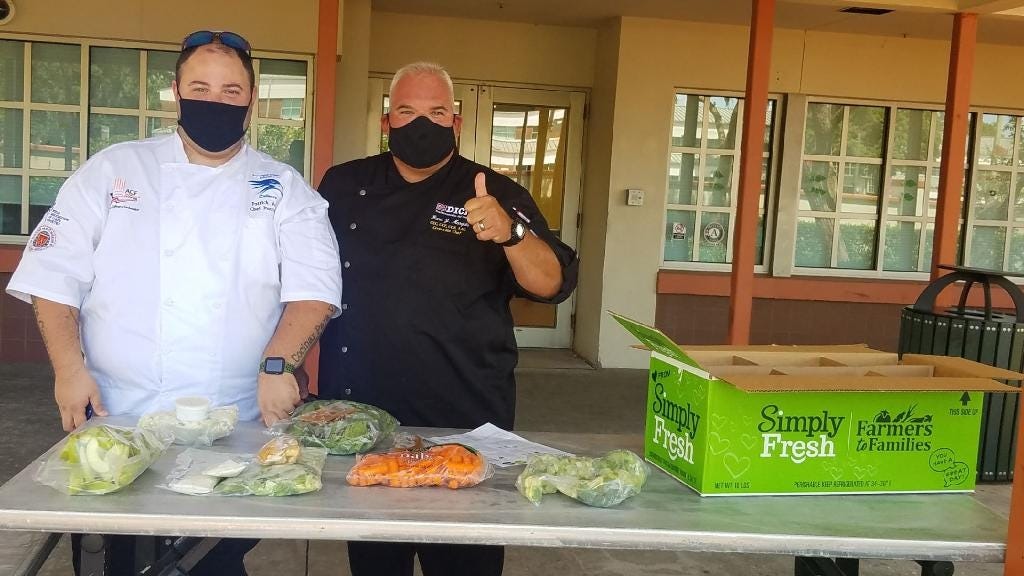
I have also watched chefs show up when there was no trophy, certification, paycheck, or publicity attached to it. They have cooked for fundraisers. They have helped families who were struggling. They have supported scholarships. They have stood together at funerals when one of our own needed a final show of respect. That matters to me.
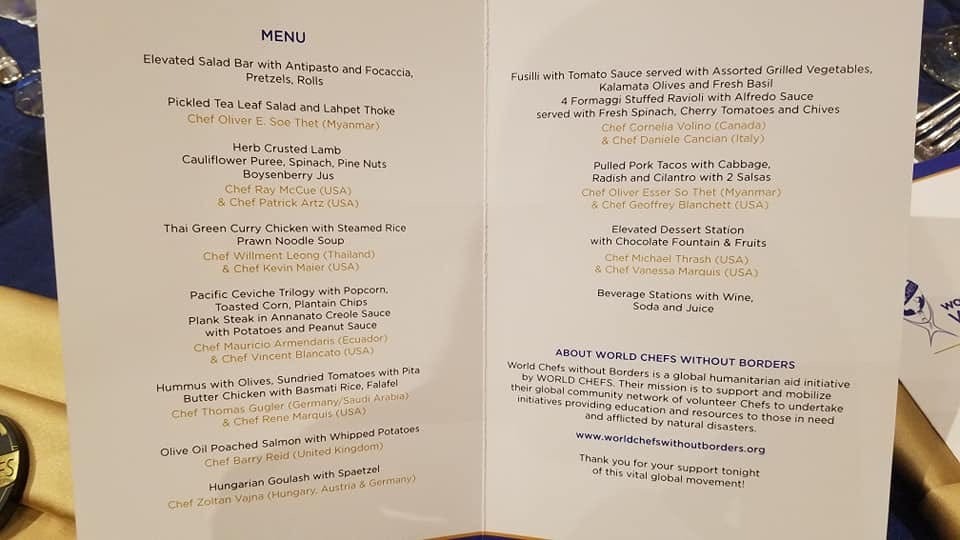
ACF’s Chef & Child initiative is built around the idea that chefs can be community educators, teaching children and families about nutrition and healthy food choices. World Central Kitchen takes that same spirit to an entirely different scale, using chefs, restaurants, volunteers, and local networks to feed people after disasters and during humanitarian crises.
Closer to home, the VooDoo Chef Foundation combines food and education through scholarships, mentorship, training, and community food assistance. It has awarded more than $100,000 in culinary scholarships and helps provide food to thousands of Tampa Bay families each year.
Different organizations. Different missions. Same basic idea.
Food gives us a way to serve. That is the part of the white coat I did not fully understand when I first put one on. The coat represents skill. It represents standards. It represents discipline and professionalism. But if that is where it stops, I think we are missing the best part of it.
It can also represent service.
It can represent the teacher who stays late with a student who is struggling. The mentor who makes an introduction that opens a door. The chef who gives up a Saturday to cook for a fundraiser. The chapter member who calls another chef because they have been unusually quiet. The group of people who show up with food when a community gets hit hard.
That is community. And none of this belongs only to chefs.
The white coat is simply the symbol I know best. You may never wear one. Your uniform might be scrubs, work boots, a firefighter’s gear, a classroom ID badge, a suit, or nothing that looks like a uniform at all. The point is not the clothing. The point is what happens when people begin counting on the person wearing it.
Over the years, the white coat has come to mean something very different to me than it did when I first put one on. I still see the craft. I still see the standards. I still see the responsibility to do the job well.
Now I also see the people. The students. The colleagues. The families. The community. The people who came before us and the people we are supposed to help bring along next.
That is the power of the white coat.
It is not really about the coat at all.
It is about what we choose to do while we are wearing it.

